
(Click Tittle)
I have a lot to say.
What started as a blog about the Riot Grrrl movement turned into something much bigger. As I was writing, current headlines kept pulling me back into the same questions women have been asking for generations: Who gets heard? Who gets believed? Who gets protected? Who gets to make decisions about our bodies and our lives?
So yes, this is a long one. I blame my ADHD. But then again, maybe I also want to challenge this twenty-second-attention-span world and ask you to stay with me.
I’m definitely part of a generation that can’t be painted into a corner.
Smack dab between Boomers and Millennials, sometimes barely acknowledged by Generation X, I’m a Xennial. Damn proud of it, too.

I’m older now, and that makes documenting this movement feel important to me especially given current affairs. Not as a historian looking in from the outside, but as someone writing from lived experience, from Los Angeles, from inside the culture that shaped me.
I’m a Chicana woman from L.A. who fell in love with punk rock and eventually found my voice through Riot Grrrl Movement. That movement changed the course of my life. It gave language to things I already felt but didn’t always know how to say. It taught me that anger could be useful. That being outspoken wasn’t something I needed to apologize for. That women didn’t have to make themselves smaller to make other people comfortable.
It helped shape me into the headstrong, outspoken woman I became.
So before I get to the heart of Riot Grrrl, I have to talk about the women who came before it. Every movement has a moment before it knows what it is. Before the name. Before the manifesto. Before somebody writes the history and draws neat little lines around where it supposedly began.
There are usually people out there working guerrilla-style, without a roadmap, creating the blueprint because the blueprint doesn’t exist yet. I’m going to write long intros for the first two because they were speaking out in a time where most women were taught to be subservient.
THE WOMEN WHO DREW PIECES OF THE BLUEPRINT
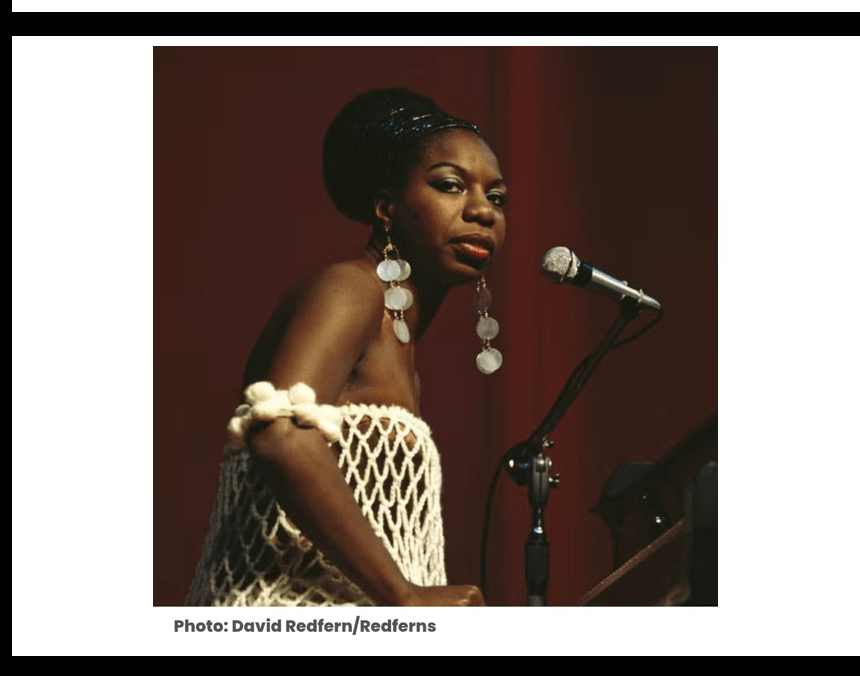
I am starting with Eunice Kathleen Waymon, better known as Nina Simone.
Born in 1933, Simone was a trained classical pianist who dreamed of becoming the first major Black female classical concert pianist in America. She was rejected by Curtis Institute of Music (you can all guess why). She began playing at clubs and invented an unrecognizable sound which was comprised of classical music, blues, jazz gospel, folk and a whole lot of soul.
She also refused to “behave” in a time when women, and especially Black women, were expected to make themselves smaller. She was political, intellectually intimidating, glamorous without being submissive, and unafraid to be angry when anger was warranted.
That is very Riot Grrrl DNA.
After the 1963 Birmingham church bombing that killed four Black girls, Simone wrote “Mississippi Goddam.” It wasn’t coded protest. It was fury put to music. She sang about segregation, racist violence, and the hypocrisy of telling Black Americans to simply be patient.
She also recorded songs like “Four Women,” “To Be Young, Gifted and Black,” and “Backlash Blues.” Her work became inseparable from the Civil Rights and Black liberation movements.
And there is another connection to Riot Grrrl that I think gets overlooked: Nina Simone challenged the acceptable female emotional range.
Women performers were often expected to be beautiful, charming, romantic, wounded, maybe sassy.
Nina could be furious.
She could be confrontational.
She could be sexually powerful, politically uncompromising, melancholy, frightening, tender, funny, and completely commanding, sometimes within the same performance.
That matters.
Riot Grrrl later did something comparable in punk. Kathleen Hanna, Tobi Vail, Allison Wolfe, Corin Tucker, and others essentially said women did not have to package their anger into something pleasant enough for men to consume.
Nina Simone had already been demonstrating that principle from another musical universe.
When she was asked what freedom meant to her, she famously answered: “No fear.”
That could have been printed across the back of a Riot Grrrl zine.
Historically, I would not literally call Nina Simone a Riot Grrrl. That term belongs to the feminist punk movement that emerged around Olympia, Washington, and Washington, D.C., around 1990 and 1991. What I am building here is a genealogy of women who created the attitude that eventually made Riot Grrrl possible.
Nina belongs in that family tree.
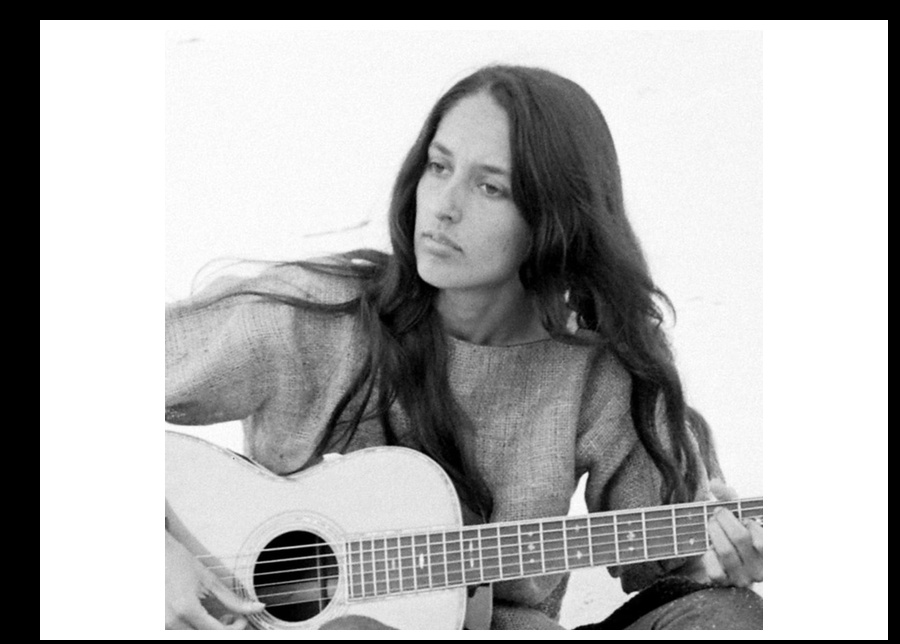
Next up is Joan Baez.
I grew up listening to Joan Baez.
She wasn’t punk. She was folk.
But now that I’m older, I realize how punk the idea behind what she was doing really was.
Long before Riot Grrrl had a name, Baez understood that a woman with a microphone didn’t have to exist simply to entertain people. She could use it to challenge them.
She marched for civil rights. She protested war. She stood beside striking workers. She got arrested. She put her reputation, her career, and sometimes her own safety behind the causes she believed in.
That matters in the lineage of Riot Grrrl.
From there, the blueprint became louder. Here is the rest of my humble list. If you know of more, please comment.
- Patti Smith, active from the early 1970s to the present, showed that a woman could seize artistic authority and refuse to perform femininity on anybody else’s terms.
- The Slits, active 1976–1982 Formed in London, The Slits were among the earliest all-female punk bands to challenge expectations of how women should look, sound, and behave. Their feminism lived in their autonomy: writing their own music, rejecting polished femininity, and refusing to be treated as decoration. They helped lay important groundwork for the feminist punk movements that followed.
- Siouxsie Sioux, active from the mid-1970s onward, showed that femininity could be confrontational, strange, sexual, intimidating, and completely self-defined.
- Poly Styrene, active beginning in the mid-1970s through later solo work, showed that a young biracial woman could scream about identity, consumerism, and the boxes society tried to force women into.
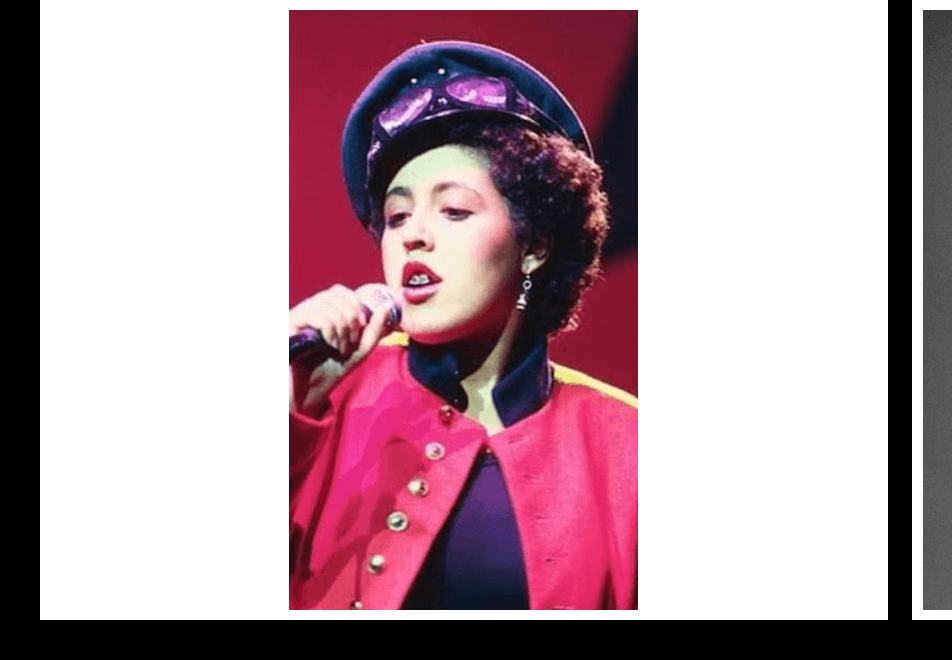
- Exene Cervenka, active from the late 1970s to the present, brought a fiercely female voice into the first wave of Los Angeles punk and helped prove that women could write, perform, and command space inside a scene still overwhelmingly dominated by men.
- Alice Bag, active from 1977 to the present, showed that a Chicana woman didn’t merely belong in punk. She could help build the fucking scene itself. She co-founded The Bags in 1977 and remains a performer, writer, feminist activist, and chronicler of Los Angeles punk history.
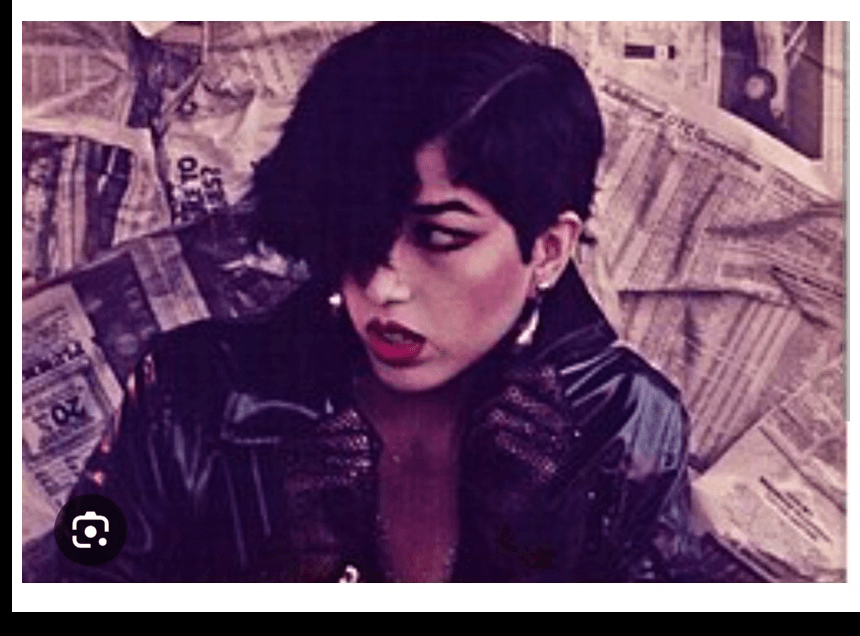
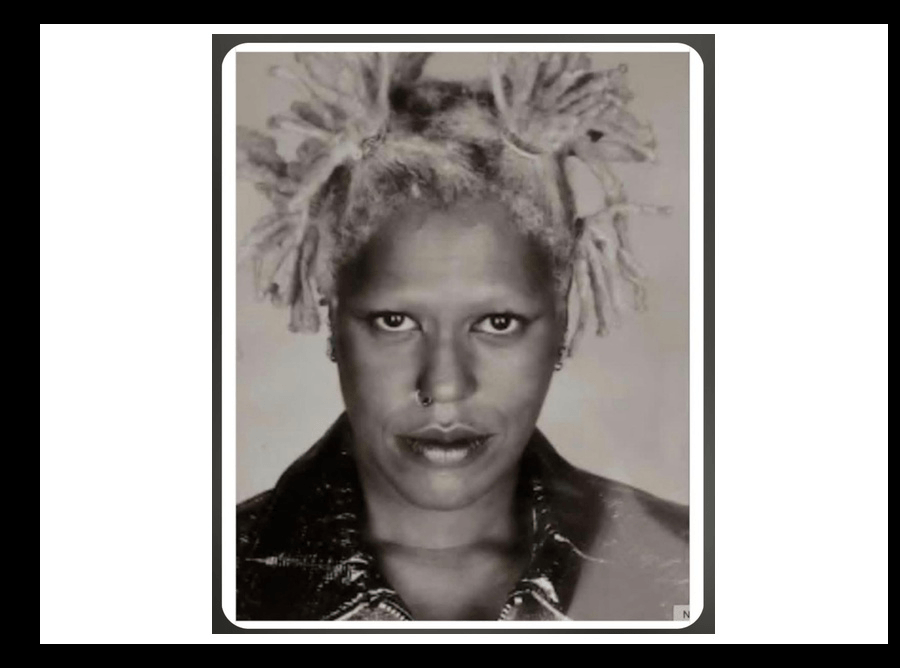
- Tequila Mockingbird, active from the late 1970s and early 1980s to the present, showed that movements are not built only by the people standing under the spotlight. She worked as an artist, journalist, producer, booker, and cultural archivist in the Los Angeles punk scene, helping underground bands reach wider audiences through television and independent media. Decades later, she founded the LA Punk Museum and continued preserving the flyers, footage, stories, art, and ephemera that might otherwise have disappeared.
That matters to me, especially as a Chicana woman from Los Angeles.
Punk history has a bad habit of getting cleaned up after the fact until everybody remembers the same handful of white guys with guitars. But women were there. Latinas were there. Women of color were there. We were not visitors to punk. We were part of the fucking architecture.
- Wendy O. Williams, Plasmatics, active from 1977 to 1990. She was not transgender, but her shaved head, Mohawk, bondage wear, topless performances, and aggressive stage presence challenged traditional ideas about how a female punk frontperson should look and behave.
- Delta 5, active 1979–1981 a politically outspoken post-punk band whose original core included Julz Sale, Ros Allen, and Bethan Peters. With two female bassists, feminist themes, involvement in Rock Against Racism, and songs such as “Mind Your Own Business,” they helped establish the DIY feminist punk vocabulary that later generations, including Riot Grrrl, would carry forward.
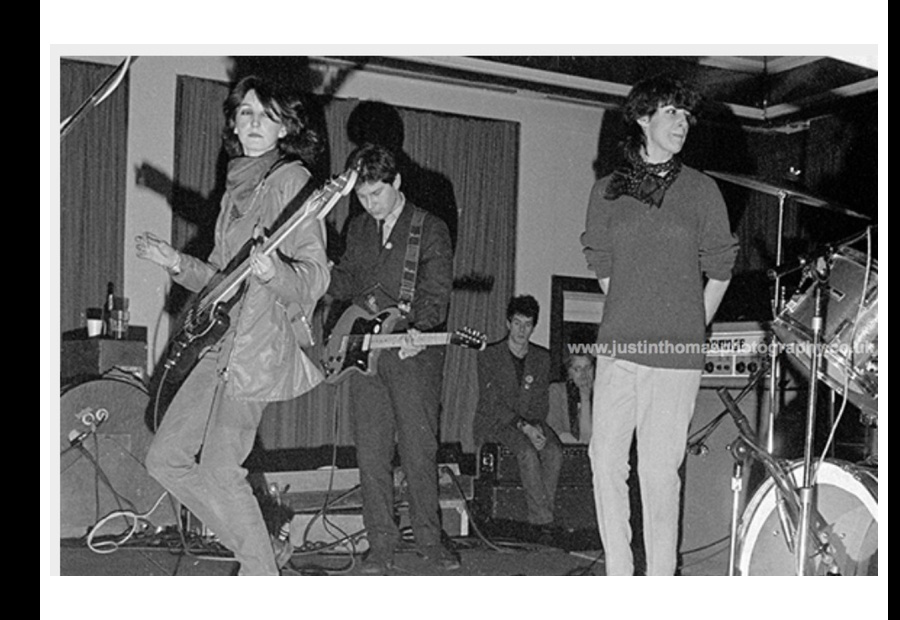
- 45 Grave (1979–1985, 1988–1990, 2005–present Fronted by Dinah Cancer (Mary Ann Sims), an American punk vocalist and pioneer of the Los Angeles deathrock movement. Previously a member of the female-led punk band Castration Squad, Dinah helped shape deathrock by combining punk aggression, horror imagery, and gothic theatrics. Her commanding stage presence and unapologetic individuality challenged the male-dominated punk scene. Through 45 Grave’s influential 1983 album Sleep in Safety, she helped establish the sound and visual identity of deathrock, paving the way for future generations of women in punk, goth, and alternative music.
- Super Heroines active 1981–1988 Founded in Los Angeles by Mexican American musician Eva O (Eva Ortiz), Super Heroines helped pioneer Southern California’s deathrock scene. As a guitarist, vocalist, and songwriter, Eva challenged the male-dominated punk underground with aggressive music, dark imagery, and an unapologetic stage presence. Her work with Super Heroines, Christian Death, and Shadow Project helped shape gothic punk years before Riot Grrrl emerged.
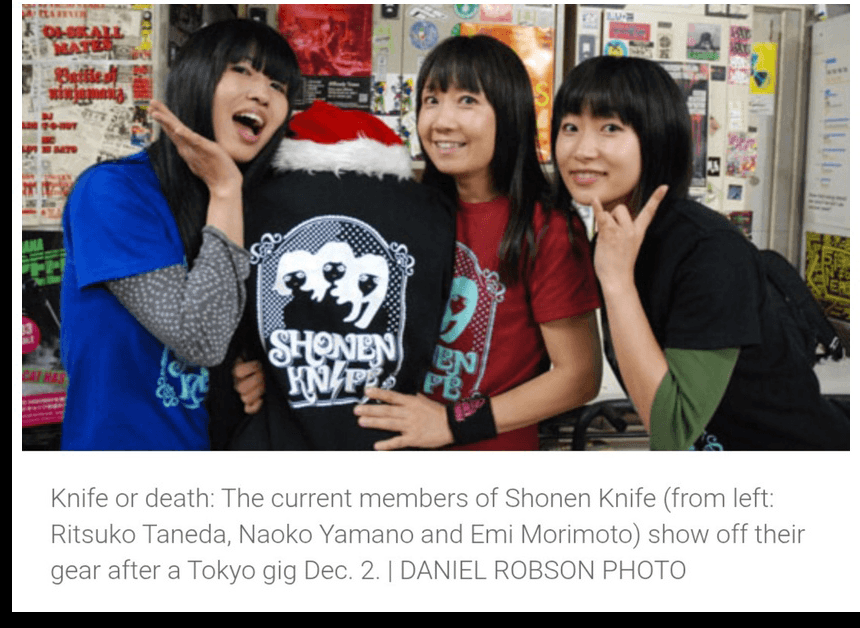
- Shonen Knife, what makes them especially important is that three Japanese women were making their own punk music in Osaka in 1981, when women in Japan’s underground rock scene were still relatively rare. Their existence reminds us that women were challenging the boundaries of punk, gender, and culture around the world long before Riot Grrrl gave that rebellion a name.
- Sinéad O’Connor, active from the mid-1980s into the early 2020s, became another kind of blueprint. She was an Irish singer-songwriter whose outspoken challenges to sexism, abuse, religious authority, and the treatment of women made her an influential feminist voice, even when she resisted being neatly labeled as part of a movement. In 1992, she tore up a photograph of Pope John Paul II on Saturday Night Live while protesting abuse in the Catholic Church. The backlash was immediate and severe. She was effectively “canceled” before that word was common. She was condemned in the press, boycotted by some radio stations, and loudly booed a few weeks later at a Bob Dylan tribute concert . Years later, as the scale of clerical abuse became widely documented, many people reevaluated the protest and saw it as far less outrageous than it had been treated at the time and understood what she had been trying to say.
- Bam Bam active 1983–1990 Fronted by African American vocalist Tina Bell (1957–2012), Seattle’s Bam Bam helped pioneer the heavy, punk-influenced sound that would become grunge. Often called the Godmother of Grunge, Bell was among the earliest Black women leading Seattle’s alternative rock movement. The band included drummer Matt Cameron, who later joined Soundgarden and Pearl Jam. Kurt Cobain also reportedly worked as a roadie for Bam Bam. Despite her pioneering contributions, Bell was largely overlooked during her lifetime. Her legacy challenges the predominantly white, male narrative surrounding grunge’s origins and highlights the contributions of Black women to alternative music.
Then came L7.
L7 1985–2001, 2014–2026: Founded in Los Angeles by Donita Sparks and Suzi Gardner, L7 helped pioneer female-led punk and grunge while challenging sexism in the music industry. Raised by feminist parents, Sparks grew up witnessing her mother’s activism and learned the importance of challenging inequality. In 1991, L7 co-founded Rock for Choice, organizing benefit concerts supporting reproductive rights with bands including Nirvana, Hole, and Bikini Kill. Their unapologetic feminism, political activism, and rebellious spirit helped pave the way for Riot Grrrl.
None of these women were following the Riot Grrrl blueprint.
They were drawing pieces of it.
THE FIRST WAVE
Kathleen Hanna and Bikini Kill were at the heart of the first wave of Riot Grrrl in the early 1990s.
Hanna, along with Tobi Vail, Kathi Wilcox, and Billy Karren, used Bikini Kill as more than a band. Their shows, zines, interviews, and organizing pushed sexism, sexual violence, reproductive rights, female anger, and exclusion from male-dominated punk spaces into the center of the conversation.
One of their most famous calls was “Girls to the front,” encouraging women and girls to move toward the stage instead of being shoved to the edges of the pit. I was at a show in LA in 94. I remember this first hand
That phrase became a perfect metaphor for the movement itself.
Girls to the front of the show.
Girls to the front of the conversation.
Girls to the front of their own fucking lives.
The first wave also included bands like Bratmobile, Heavens to Betsy, Excuse 17 and Sleater Kinney along with a huge network of zines, meetings, and DIY organizing.
Riot Grrrl was never just a music genre.
It was a feminist movement built inside punk culture, demanding that women be heard, believed, included, and allowed to create without asking permission.
It was a movement born inside a male-dominated scene that demanded equality, visibility, and change.
Change in the way women were treated.
Change in the way our voices were dismissed.
Change in the way society expected us to shrink ourselves into acceptable little boxes while men gathered around tables talking about politics, power, and laws that directly affected our bodies and autonomy.
Too often, they were making decisions about women without ever really asking what the fuck women wanted.
Riot Grrrl challenged that.
It said we had opinions. We had anger. We had political voices. We had ownership of our bodies, our creativity, our sexuality, our ambitions, and our futures.
And we were not asking permission to participate.
One of the reasons I wanted to write this article is because so many of the viral posts about Riot Grrrl didn’t reflect Black and Brown perspectives. Latina and Black women have always been part of punk, yet their contributions are too often overlooked. Their stories, experiences, and voices matter too, and they deserve a place in the history of this movement.
I’m actually glad I get to talk about Sista Grrrl Riot because the person who introduced me to this part of punk history is someone who has been part of my own story for more than thirty years.
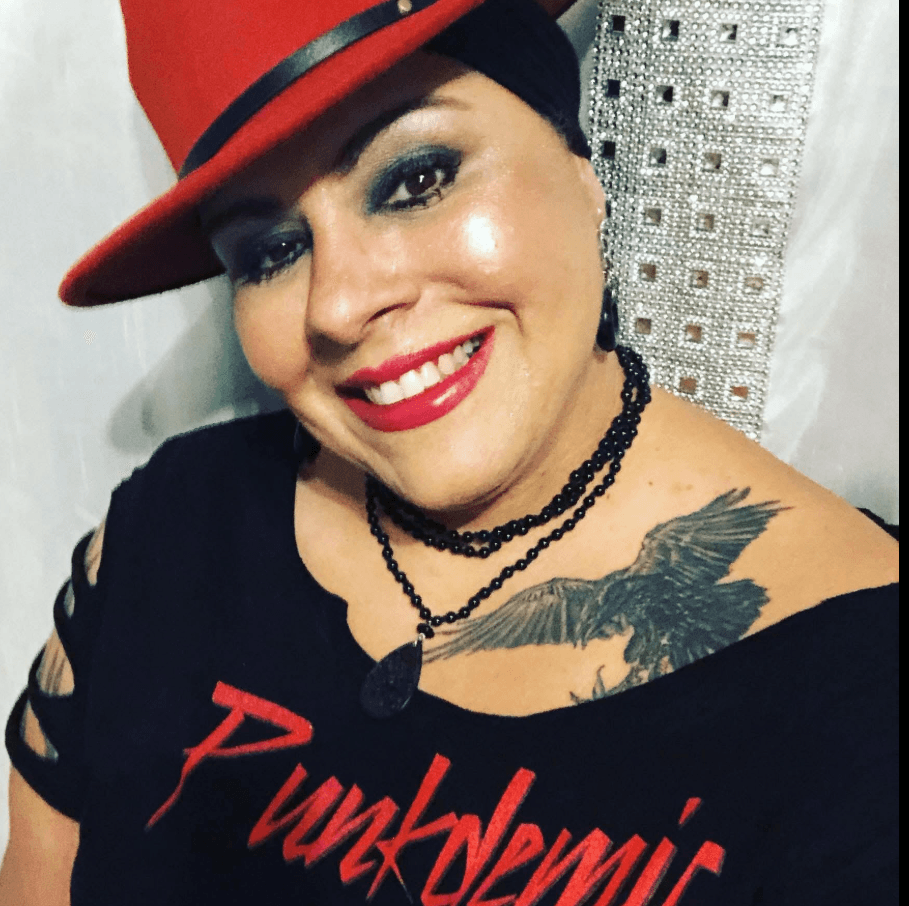
Shalana Dennis, aka Amazon, of Punkdemic and co-founder of Joose Distro (a music distribution company) is my childhood BFF. We go all the way back to 1994, and I remember the exact day we met.
It was April 8, 1994, the day the news broke that Kurt Cobain had been found dead. My friend Rena and I heard the announcement on KROQ, and Rena wanted to go back to her house to get drunk and listen to Nirvana records. She told me that her cousin Shalana would be joining us.
Then Shalana walked up, as we walked to Rena’s the heat was smoldering, I was losing steam. So Shalana told me to hop on, and she gave me a piggyback ride the rest of the way.
Part of what made Shalana stand out to me was that she was biracial in a scene where brown and black girls were not always present in our local community. She was unlike any punk woman I had ever seen before. She was 5’11”, with a faux hawk, a long black trench coat, and 10-hole Doc Marten boots. She didn’t fit the mold, and that was precisely what made her unforgettable. She would later become known in the scene as Amazon.
From 2010 to 2017, Shalana also worked as a Pirate Punk promoter, helping support and promote the punk scene from within. She even hosted a few backyard punk shows at her house. She wasn’t simply watching the culture happen around her. She was part of building it, creating space for bands, artists, and people who did not get to play big stages or festivals.
All these years later, Shalana has created her own product line, Punkdemic, and hosts a podcast featured on iHeartRadio, where she interviews artists from the punk and alternative scenes, with a particular focus on BIPOC musicians and bands.
Again, it was Shalana who introduced me to the history of Sista Grrrl Riot and helped me understand why this chapter of punk deserves to be archived and remembered. There is something beautifully circular about that for me. I met her on one of the darkest days in alternative music history, and more than thirty years later she was still introducing me to parts of punk history I had never been taught.
Sista Grrrl Riot is one of those histories.
As Riot Grrrl began creating space for young women within punk, another question remained: whose experiences were actually being represented in that space?
For many Black and Brown women in punk, the answer was complicated.
Sista Grrrl Riot emerged in New York City in the late 1990s, founded by four Black punk musicians: Tamar-kali Brown, Simi Stone, Honeychild Coleman, and Maya Glick (also known as Maya Sokora). Frustrated by the lack of representation in the predominantly white Riot Grrrl movement and the male-dominated punk scene, these women created their own space for Black female expression. Their groundbreaking concerts challenged racism, sexism, and exclusion within alternative music. Sista Grrrl Riot helped lay the foundation for the Afro-Punk movement, proving that Black women weren’t just part of punk history. They were helping redefine it. Sista Grrrl confronted another layer of exclusion: what happens when a woman experiences racism and sexism at the same time.
Sista Grrrl did not erase what Riot Grrrl accomplished. It expanded the conversation. It demanded that feminism within punk also examine race, identity, sexuality, class, and which women were being heard when the movement shouted, “Girls to the front.” It is important for all people to feel safe.

ACROSS THE WORLD
Across the globe, women have used music, performance, and protest to demand rights, and some have been jailed, threatened, or punished for it.
In Russia, Pussy Riot became one of the clearest examples. In 2012, members Maria Alyokhina, Nadezhda Tolokonnikova, and Yekaterina Samutsevich were arrested after an anti-Putin protest performance inside Moscow’s Cathedral of Christ the Saviour. All three were convicted, and two served lengthy prison sentences. Their feminism, opposition to authoritarianism, and willingness to use punk as political protest made Riot Grrrl’s DIY rebellion global in spirit.
In Pakistan, women have also used music and public space as forms of feminist resistance. The punk duo Garam Anday emerged from the country’s feminist movement and used humor and music to challenge domestic servitude, violence against women, and the expectation that women’s lives should revolve around reproduction. Their work grew alongside the Aurat March, Pakistan’s major feminist protest movement, whose activists have faced threats and vilification for demanding bodily autonomy, equality, and freedom from abuse.
Different countries.
Different religions.
Different governments.
Different music.
But the same stubborn demand keeps appearing:
We are here. We have voices. And you do not get to decide that silence is our proper place.
MIA ZAPATA, THE GITS, AND THE QUESTION I COULDN’T SHAKE
As I gathered research for this piece, I kept circling back to one woman.
Mia Zapata.
Born August 25, 1965, Zapata was the lead singer of The Gits, a Seattle punk band that came up alongside the broader Pacific Northwest explosion of the early 1990s.
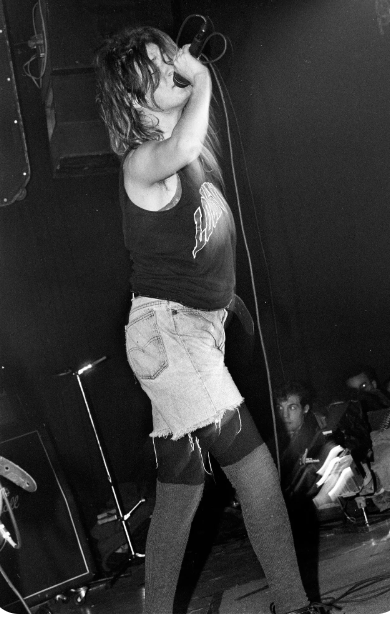
The Gits were not technically a Riot Grrrl band.
But Mia existed in the same ecosystem. Which is why I am mentioning her.
Before her death, women in and around Riot Grrrl were already speaking loudly about reproductive rights, equality, inclusion, female anger, sexism, and oppression.
But Mia Zapata’s rape and murder forced the scene to confront something even darker.
The conversation widened.
Women began speaking more openly about rape, domestic violence, stalking, financial abuse, coercive control, and murder. The danger women faced was no longer something that could be ignored. It had entered the scene itself.
On July 7, 1993, Mia left a bar in Seattle’s Capitol Hill neighborhood.
She never made it home.
She was raped and murdered by a stranger.
She was 27 years old.
Her death devastated the Seattle music community.
But grief turned into action.
Women who knew Mia began meeting together, initially to process what had happened. Those conversations expanded beyond Mia’s murder into something much larger: rape, childhood sexual abuse, intimate-partner violence, street harassment, and the constant calculations women made simply trying to stay safe.
Those meetings eventually helped give birth to Home Alive, an organization that developed practical self-defense education and community safety resources.
That response matters to me.
Because Mia’s death exposed something brutally simple.
You could be fearless onstage.
You could be outspoken.
You could belong to a progressive underground scene.
You could surround yourself with artists, feminists, and people who rejected mainstream rules.
And you could still be a woman walking home alone at night.
The politics were not just for the stage anymore.
Mia’s death became one of those moments when the conversation about women’s safety could no longer remain inside a song or on stage in a venue. Her death hit the punk scene from within.
People had to ask:
What do we actually do?
How do we protect one another?
How do we protect ourselves from danger?
How do we make our communities safer?
And decades later, while writing this article, Mia’s story made me ask another question.
How many women are being killed because of violence rooted in gender, control, sexual violence, intimate-partner abuse, or misogyny?
So I went looking for statistics on femicide.
THE WORD WE DON’T CONSISTENTLY COUNT
Femicide generally refers to gender-related killings of women and girls.
And that is where I ran into a problem.
The United States counts homicide. We count female homicide victims. We collect information about intimate-partner killings, domestic violence, sexual assault, and circumstances surrounding many murders.
The United Nations defines femicide as the intentional killing of women or girls because of their gender. The UN considers it one of the most extreme forms of violence against women. It encourages countries to improve laws, protect women at risk, prosecute offenders, and track femicide separately from general homicide statistics.
But we do not consistently track femicide as its own standardized national category.
That bothers me.
Not every murder of a woman is simply a homicide. That distinction matters.
There are killings where sexual violence, intimate-partner abuse, coercive control, gender hatred, or other gender-related circumstances are part of the story.
Those circumstances matter too.
If they disappear inside the broader word “homicide,” what patterns are we missing?
What connections aren’t being made?
What warning signs aren’t being recognized?
How can we understand the scope of something if we don’t consistently track it?
Mia Zapata’s murder, or any woman’s murder, should never be reduced to “just another woman gone.”
She was a woman.
A musician.
A friend to many.
A daughter.
A singer whose voice was supposed to keep getting louder.
Her friends did not just mourn her.
They organized.
They taught.
They protected one another.
They turned grief into action.
And maybe that is one of the most important threads running through this entire history.
Riot Grrrl was never only about telling women to speak up, speak out, and fight for our rights.
It is also about uniting us with our allies. It was never about hating men but it is just as important to demand that the men in our lives stand at our sides as our allies.
THE STORIES THAT MADE THIS PERSONAL
My mom always taught me to be aware of predators, to yell “FIRE!” instead of “HELP!” if I was ever in danger, and above all, to trust my instincts.
Growing up in the ’90s, she had me watching documentaries about serial killers like Ted Bundy, Jeffrey Dahmer, and Richard Ramirez. I was a young girl, but my mom wanted me to understand that dangerous people don’t always look dangerous.
When I was about 13 years old, I was walking home after grabbing a slice of pizza from Bonello’s. I decided to take the alley when a maroon Volvo pulled up beside me.
The driver asked if I wanted a ride.
I said, “NO.” But he wouldn’t take no for an answer.
My mom had taught me something that has stayed with me my entire life: If you sense danger, you don’t owe anyone politeness. You don’t have to worry about hurting someone’s feelings. Your safety comes first.
So I told him, “FUCK YOU!” and took off running.
I knew better than to run straight home. I didn’t want this man knowing where I lived. Instead, I ran to my neighbor’s house. He wasn’t home, so I hid on his porch.
From there, I watched that same maroon Volvo circle my street twice.
A few months later, I was watching the news with my mom when a report came on about a serial rapist who had finally been captured. I won’t disclose his name because this still unnerves me.
I recognized his face. It was the man in the maroon Volvo.
The man identified in the news report was a brutal serial rapist. I’ll never forget that moment. Or the lessons my mother drilled into me. She taught me that being polite should never come at the expense of my safety. That I had every right to say no, to get angry, to run, and to protect myself and most importantly, that I didn’t owe a stranger the benefit of the doubt when my instincts were screaming that something was wrong.
I’d rather be considered rude than become someone’s victim.
Thank you, Mom. 🖤
My mother used to volunteer for a rape crisis hotline through the YWCA.
She told me they received calls from girls as young as thirteen and from women in their eighties, including women who had survived brutal attacks inside their own homes.
Think about that.
Thirteen.
Eighty.
Sexual violence does not belong to one age group, one generation, or one kind of woman.
There is no magical age when a girl or woman suddenly becomes exempt from it.
More recently, my best friend’s 21 year-old daughter experienced another side of the same problem.
She had briefly dated a young man. After noticing several red flags and getting a bad feeling, she told him she would rather remain friends.
That should have been the end of the story.
Instead, he began repeatedly calling and texting her, leaving vile and humiliating messages. When she did not respond, he searched through her social media and began posting cruel things about her on the profiles of friends whose posts she had commented on.
At the same time, her grandfather was hospitalized and having surgery. She was focused on her family and was not immediately answering calls or texts.
He became angry.
The harassment escalated. He told her he wished her grandfather would die.
Her mother stepped in and contacted police, and they were advised to seek a restraining order.
Think about that.
A young woman was harassed and traumatized because she rejected a man.
She was not cruel to him.
She did not humiliate him.
She simply said, “We can be friends.”
And somehow, even that was treated as an offense worthy of punishment.
These stories are not rare enough.
Ask women.
You will hear different versions of these types of experiences over and over again.
The man who will not stop texting.
The ex who suddenly appears outside work.
The date who becomes frightening after hearing no.
The stalker who somehow knows where she lives.
The threats that begin online.
The woman who changes her route home because she feels she is being followed.
The girl who gives a fake phone number because she is afraid of what might happen if she simply says she is not interested.
Women learn young, not to yell “help” instead we are taught to yell “fire”.
THE MISOGYNY DIDN’T DISAPPEAR. IT MOVED.
When I was younger, men like Tom Leykis could turn misogyny into radio entertainment.
Looking back, I sometimes wonder how much rhetoric like that helped prepare the soil for what we now recognize as incel culture and the online manosphere.
Leykis created traction for that movement. The misogynistic ideas were voiced and aired to tons of impressionable young men. Leykis 101 was Tom Leykis’s advice segment directed mainly at young men. He encouraged them to avoid emotional and financial commitment to women, focus on casual sex, and protect their money and independence.
- Never spend more than about $40 on a date.
- If sex has not happened by the third date, stop seeing the woman.
- Avoid dating single mothers.
- Avoid marriage and serious relationships while young and focus on career and money first.
- Do not live with a girlfriend.
- Keep your income and finances private.
- Do not become emotionally dependent on a partner.
- He frequently portrayed women as potential financial or emotional liabilities and sometimes called them “dream killers.”
- Promoted the “Hail Mary,” a tactic where a man would promise a future together to convince a woman to have an abortion, then leave her afterward.
Then the internet gave that worldview a new home.
Sites like Return of Kings and rape academies pushed that hostility into something darker, publishing material that minimized consent, portrayed women as manipulative or inferior, and framed male resentment as something women had brought upon themselves.
Then came Andrew Tate and the social-media age.
Different platform.
Different decade.
Same poisonous idea underneath: that respecting women somehow makes a man weaker.
Misogyny did not disappear.
It moved.
From the radio dial to message boards.
From message boards to websites.
From websites to algorithms.
And now it can reach a teenage boy alone in his bedroom, dressed up as advice about becoming an “alpha.”
AN AGING RIOT GRRRL RAISING BOYS
I grew up independent and socially aware, during a time when the music scene was thriving, independent zines were passed from hand to hand, pirate radio was getting shut down by the FCC, and music, art, feminism, and political activism were tangled together.
You did not need an algorithm to tell you what mattered.
You found it yourself.
I’m a Xennial Riot Grrrl.
A back-in-the-day feminist.
And now, in my older age, I watch the events unfold in our nation and wonder “WTF”?
I’m the mother of two boys.
So feminism looks a little different from this side of motherhood.
I’m not only thinking about what kind of world women have to survive in.
I’m thinking about what kind of men I’m putting into that world.
I’m trying to raise boys who understand that masculinity does not have to mean domination. Boys who recognize toxic masculinity when they see it. Boys who understand consent, boundaries, and respect.
I do not want to teach my sons that being male makes them guilty of something.
I want to teach them to be the kind of men any woman can feel safe around.
Sometimes allyship is making sure somebody is not standing alone.
Strength can mean being the man who tells another man, “Dude. Stop.”
And somewhere on the other side of that equation is a woman being told to stop being difficult, stop being loud, smile more, calm down, and cook dinner.
WHY I THINK WE NEED ANOTHER WAVE
The issues have changed shape, but they have not disappeared.
Harassment now follows women onto their phones, into their social media accounts, schools, workplaces, relationships, and homes.
The technology may be different.
The entitlement, intimidation, violence, and fear are painfully familiar and sexual violence against women and children have become rampant.
I might be close to fifty, but there is still a fire burning in me.
If anything, it is burning hotter now ( I’m not just talking perimenopause here).
Getting older does not mean becoming quieter.
It means I have lived long enough to recognize patterns, remember the fights that came before, and understand how easily hard-won progress can be forgotten when the next generation is never told what it took to get there. Which is why it is so damn concerning that Roe vs Wade got overturned.
My generation cannot disappear into nostalgia.
We cannot just talk about the shows we went to, the records we bought and the cool clothes we wore.
We have to share why we fought so hard to have our voices heard. We have to tell the stories.
We have to preserve the history.
We have to remind younger women that their voices matter, that questioning power matters, and that knowing how previous generations fought for autonomy matters.
Not because they have to think exactly like we did.
They shouldn’t.
Every generation has to find its own language, its own tools, and its own battles.
But they deserve to know that women before them pushed, organized, created, protested, wrote, screamed, marched, made art, and refused to disappear.
Maybe our job now is not to tell younger women where to stand.
Maybe it is to make sure they know they are allowed to stand up at all.
GIRLS TO THE FRONT. MEN, STAND BESIDE US.
I felt compelled to talk about the women in music who spoke out in a time when it was dangerous.
About the women who came before us and struck the matches.
About the women who built the movement.
About the women who carried it forward.
About the women who survived.
In researching this history and reflecting on the women who have challenged expectations through music, I also wanted to make space for transgender women in punk. To me, femininity is inclusive. Trans women have also fought to be seen, heard, and accepted in spaces that did not always make room for them, and their stories belong in the larger history of women who used punk to live defiantly and authentically.
Jayne County, Wayne County & the Electric Chairs, active from the early 1970s. A transgender punk pioneer from the New York underground who later became a major figure in the London punk scene. She is considered one of the earliest openly transgender performers associated with punk.
Phranc, Nervous Gender, Catholic Discipline, and solo, active from the late 1970s to the present. An L.A. punk musician known for a masculine, androgynous presentation. She later became known as a lesbian folksinger and was an important influence on queercore.
Vaginal Davis, ¡Cholita! The Female Menudo, Afro Sisters, and PME, active from the late 1970s to the present. A queer Chicana performance artist and punk provocateur from Los Angeles who used drag, gender ambiguity, race, and satire years before queercore became an established movement.
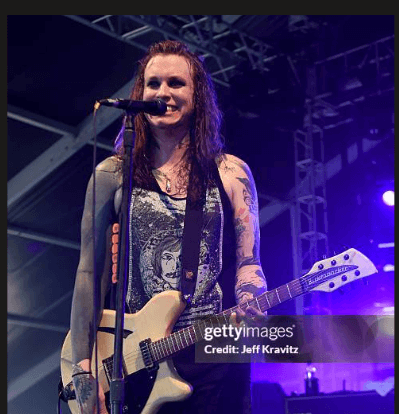
Laura Jane Grace Against Me! The band did not start off with a female singer. Grace, publicly came out as transgender in 2012, after Against Me! had already become a well-established and fiercely political punk band. At a time when there were very few high-profile trans women in punk, she chose to live openly and unapologetically as herself.
Her visibility gave many trans fans something they had rarely seen in the scene: themselves reflected back from the stage. To me, that is punk in its purest form, challenging expectations, refusing to conform, and making room for others to feel seen. I know they are considered more folk, anarcho-punk, but this is important for me to add as an ally.
Riot Grrrl changed the course of my life because it taught me that my voice belonged to me. You don’t have to agree with me. This is my post and my opinion.
I’m a viejita now but I’m still using my voice.
Maybe louder than ever.
And now I understand that preserving this history is not about nostalgia.
It is about handing something forward.
Not a script.
Not a political uniform.
Not instructions for what the next generation of women must believe.
A reminder.
You are allowed to question.
You are allowed to speak.
You are allowed to take up space.
You are allowed to say no.
You are allowed to be angry when something is wrong.
You are allowed to organize.
You are allowed to demand better.
And to the men standing beside us:
Do not speak over us.
Do not rescue us.
Stand with us.
Use your voice when ours is not in the room.
Teach your sons that rejection is not humiliation and masculinity is not domination.
Call out the behavior that makes women unsafe.
Be the man who says, “Stop.”
An ally is not someone who takes over the fight.
An ally is someone who stands beside you in it.
Someone who listens.
Someone who believes you when you say something is wrong.
Someone who uses their own voice, access, or advantage to challenge injustice when you are being drowned out by ignorance.
Someone willing to say, “This isn’t okay,” even when speaking up costs them comfort, popularity, or approval.
An ally does not need to be the hero.
They just need to refuse to be silent.
We know too many Jane Does.
We have mourned too many Jane Does.
And somewhere along the way, we have to admit the truth:
We are Jane Doe.
I came into this story with the intention of only talking about the music that gave a loud voice to women who wanted to fuck the system up and demand change.
I’m still trying to shake things up!
Women, use your voice.
Men who believe in equality, stand beside us.
And together, we can take down the fucking system!